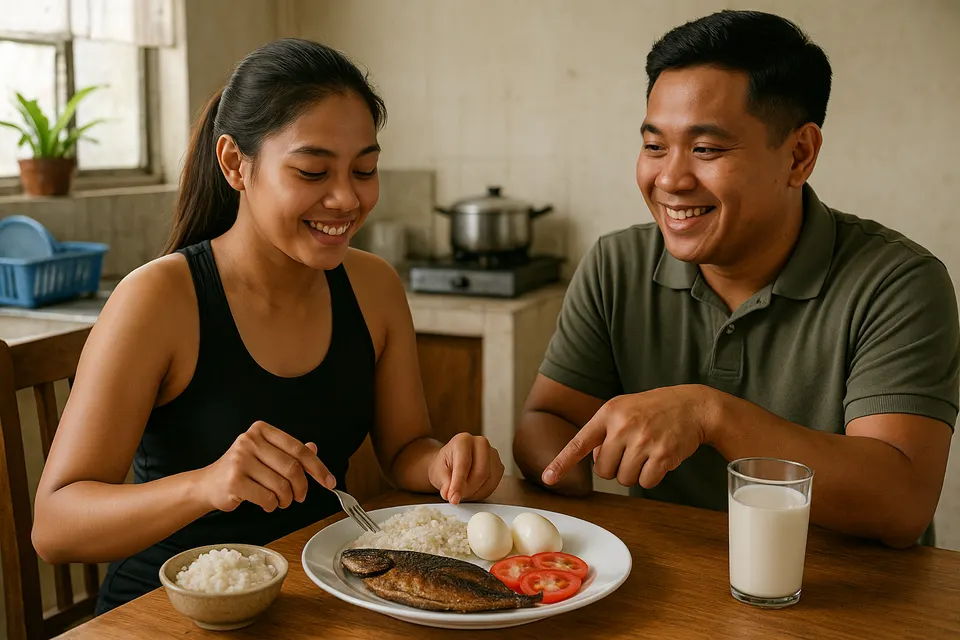
Generated illustration.
Most high-protein breakfast lists are built on Greek yogurt, protein powder and smoked salmon. A Filipino kitchen already has better options: eggs, tinapa, tuyo, daing, leftover chicken, tokwa, monggo and milk. Put one or two of them at the centre of the plate and the rice or pandesal becomes the side.
This article gives no protein grams per dish. The figure depends on the size of the egg, the cut of fish and the portion, and a printed number would be a guess. If you want figures for Filipino foods, the DOST Food and Nutrition Research Institute publishes Philippine food composition tables, and packaged foods show protein on the label.
Why protein at breakfast
Protein is the part of a meal that keeps you full longest, and it gives muscle what it needs to recover from training. The usual rushed breakfast, pandesal with coffee or a bowl of sweet cereal, has very little of it. That is why so many people are hungry again by ten o’clock. Moving protein into breakfast is one of the simplest changes for anyone trying to lose weight or get stronger.
How much is enough
You do not need to weigh anything. A simple guide: a portion of protein about the size and thickness of your palm, or two eggs, at every breakfast. If you train hard or are trying to build muscle, add a second source, such as a glass of milk with the eggs, or tokwa with the fish.
Fifteen high-protein Filipino breakfasts
With eggs
- Two boiled eggs, a measured cup of rice and tomatoes.
- Tortang talong made with two eggs, with a small portion of rice.
- Scrambled eggs with malunggay, tomato and onion, and one pandesal.
- Egg and tuna omelette with chopped onion, with rice or pandesal.
- Silog with a lean ulam: tapsilog with lean beef, or bangsilog, the egg cooked in a teaspoon of oil.
With fish
- Tinapa with a boiled egg, rice and cucumber.
- Daing na bangus, pan-grilled, with rice and ensaladang kamatis.
- Tuyo with a boiled egg and rice, the tuyo kept to two or three pieces because of the salt.
- Sardines in tomato sauce sauteed with onion and malunggay, over rice.
- Leftover inihaw na isda flaked over rice, with a boiled egg.
With chicken, tokwa and monggo
- Arroz caldo with extra chicken and a boiled egg.
- Leftover chicken adobo, skin removed, with rice and cucumber.
- Tokwa scrambled with egg, tomato and green onion, with rice.
- Ginisang monggo from the night before, reheated, with a boiled egg.
- Pandesal filled with shredded chicken or tuna and egg, with a glass of milk.
Quick ones for busy mornings
Boil a dozen eggs on Sunday and keep them in the fridge. Two eggs and a banana, or two eggs and a pandesal with a glass of milk, take no cooking at all. Leftover ulam from dinner is the other fast option: grilled fish, chicken tinola or monggo, reheated with rice, is a high-protein breakfast that took no extra work.
Before and after training
If you train early, eat something small an hour before, such as a banana or a pandesal, and have one of the breakfasts above afterwards. Our article on training in the Philippine heat covers timing and water for morning sessions.
Questions people ask
What is a good high-protein Filipino breakfast? Eggs with tinapa or daing and rice, arroz caldo with extra chicken, or tokwa scrambled with egg. Each puts protein at the centre of the plate.
Is silog a high-protein breakfast? It can be. The egg and a lean ulam such as bangus or lean tapa give plenty of protein. Longganisa, tocino and hotdog carry more fat and sugar than protein, so keep them for weekends.
Do I need protein powder? No. Eggs, fish, chicken, tokwa, monggo and milk cover breakfast for most people. A shake can help on days with no time to eat, but it is a convenience.
How many eggs a day is fine? For most healthy adults, eggs are a good everyday food. If you have high cholesterol, diabetes or heart disease, ask your doctor how many suit you.
For more breakfasts beyond the protein, see our twenty Filipino breakfast ideas, and for protein at lunch and dinner, high-protein Filipino food. Fit Bud’s strength training and weight-loss coaching pair training at home with habit-based guidance on food, and send anything medical to your doctor. If you would like help with both, tell us your town and your goal.