
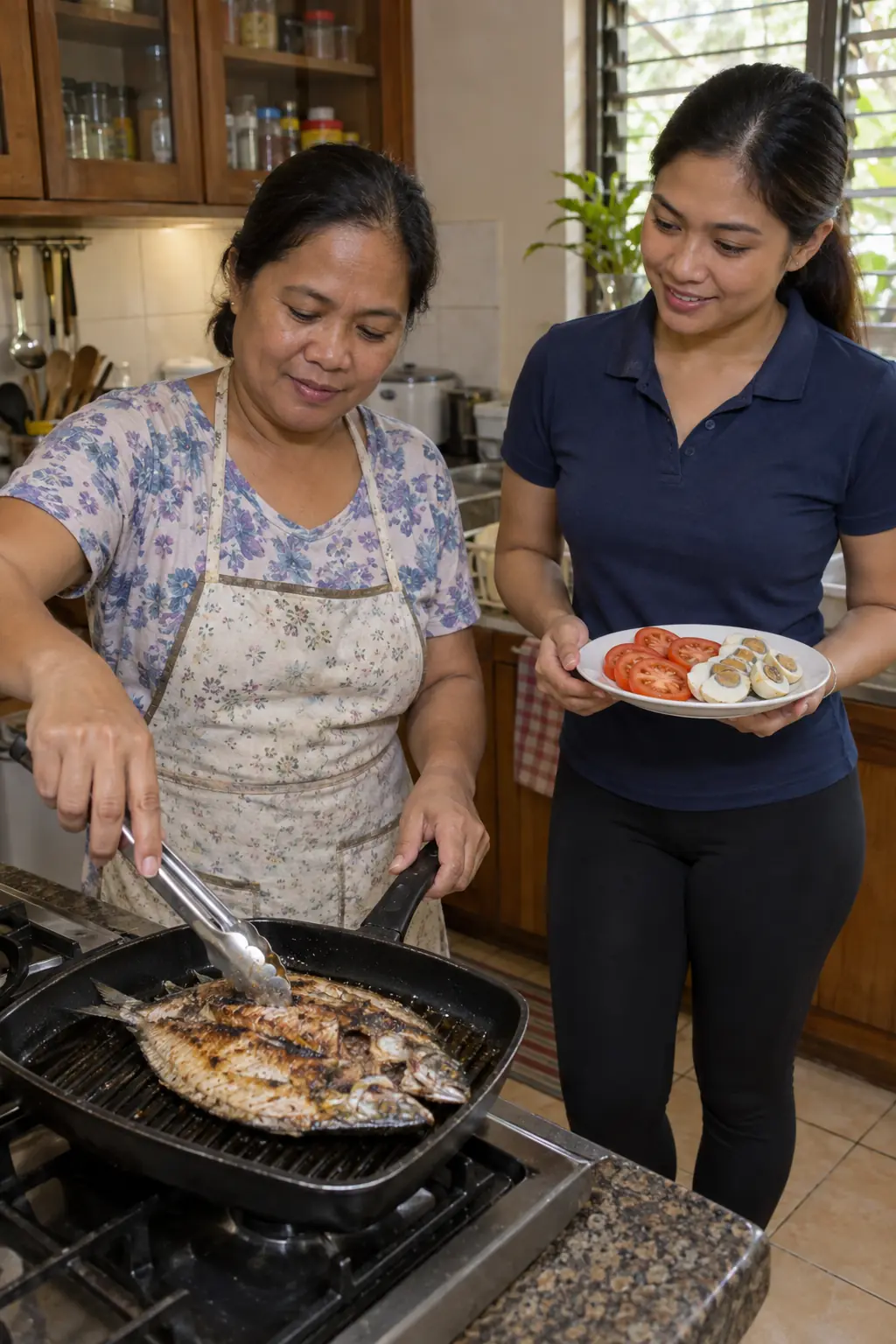
Generated illustration.
Anyone who starts strength training at home soon hears the same advice: eat more protein. It helps muscle recover after a session and keeps you full for longer, which is why it matters as much for losing weight as for getting stronger. The good news is that a Filipino kitchen is already full of it. Most people do not need powders or imported foods, only to put a palm-sized piece of protein on each plate.
This article gives no gram counts per dish. The amount depends on the cut, the recipe and the portion, and a figure printed here would be a guess. For numbers, the DOST Food and Nutrition Research Institute publishes Philippine food composition tables, and a registered nutritionist-dietitian can work out how much you need for your age, weight and training.
Where the protein is on a Filipino table
Fish. Bangus, tilapia, galunggong, tuna, tamban and dilis. Grilled, steamed, paksiw or in sinigang, fish gives good protein with little added fat. Tinapa and daing count too, cooked with little oil.
Chicken. Tinola, adobo with the skin removed, inihaw na manok, chicken breast in bistek or afritada.
Eggs. Boiled, poached or in a torta with vegetables. Cheap, quick and easy to prepare ahead.
Tokwa and tofu. Sauteed, in tokwa’t baboy with more tokwa than pork, or added to vegetable ulam.
Monggo. Ginisang monggo is protein and fibre in one pot, and it keeps well for baon.
Lean pork and beef. Nilaga, bistek and adobo made with lean cuts and the visible fat trimmed.
Milk and yoghurt, if they suit you, as part of breakfast or merienda.
Twelve high-protein ulam ideas
Each of these puts a good piece of protein at the centre of the plate, and all of them are cooked in ordinary Filipino kitchens:
- Tinolang manok with malunggay and sayote.
- Inihaw na bangus or tilapia with ensaladang kamatis.
- Sinigang na isda or sinigang na hipon.
- Chicken adobo with the skin removed.
- Paksiw na isda.
- Bistek Tagalog made with a lean cut of beef.
- Chicken afritada with more chicken than potato.
- Tokwa’t baboy made with more tokwa than pork.
- Ginisang monggo with malunggay and a little fish or chicken.
- Tortang talong, or a vegetable torta with two eggs.
- Ginisang sardinas with misua and an egg.
- Tuna or chicken sisig cooked at home with less mayonnaise.
Protein on a tight budget
Some of the cheapest protein on a Filipino table is also some of the most useful.
Eggs. Boil a batch at the start of the week and they cover breakfast, baon and merienda.
Canned sardines and tuna. Ready to eat and easy to keep in the cupboard. Tuna in water carries less oil than tuna in oil. Sardinas are salty, so go easy on patis and toyo that day.
Small fish. Galunggong, tamban and dilis usually cost less than bangus or tilapia and do the same job on the plate.
Monggo and tokwa. They stretch a small amount of pork or fish across the whole family’s pot.
Chicken thighs. With the skin taken off at home, they work in tinola, adobo and inihaw as well as fillets do.
A palm on every plate
A simple rule that works for most adults: a piece of protein about the size of your palm at each main meal. Then half the plate vegetables and a measured scoop of rice. Spread across breakfast, lunch and dinner, that pattern covers what most people training at home need, without counting anything.
Breakfast is where protein most often goes missing. Our healthy Filipino breakfast ideas show how to put an egg, fish or chicken into the first meal of the day, and our high-protein breakfast ideas list fifteen built around it.
Keep the protein, lose the heavy parts
Many high-protein Filipino dishes also carry a lot of fat: lechon kawali, crispy pata, sisig and anything deep-fried. The protein is real, but so is the oil. A few swaps keep the first and cut the second:
Grill or steam fish instead of frying it.
Remove chicken skin before cooking adobo or tinola.
Choose lean cuts for nilaga and bistek, and skim the fat off the pot.
Cook sisig at home with chicken or tuna and less mayonnaise.
Measure the oil with a spoon.
Protein after training
After a strength session, a meal with protein within a few hours helps muscle recover. For most people that is simply the next normal meal: rice, grilled fish and vegetables after an evening session, or eggs and pandesal after a morning one. Supplements are optional, and anyone with kidney disease or another medical condition should talk to their doctor before increasing protein.
Plan it for the week
Cooking two proteins on Sunday makes the rest easy. The meal prep gallery shows grilled bangus, tinola and adobo portioned into boxes in Filipino kitchens, and our guide to meal prep for weight loss sets out the routine. For a whole week already planned around fish, chicken, eggs and tokwa, see the Filipino meal plan for a week.
Food and training together
Protein does its job when there is training to recover from. Fit Bud’s strength training sessions at home build that side, and weight-loss coaching adds habit-based guidance on portions, ulam and merienda, with anything medical sent to your doctor. If you would like help with both, tell us your town and your goal.
Questions people ask
Which Filipino food is highest in protein? Weight for weight, lean meat, chicken, fish and dried fish such as dilis and tuyo carry the most, though dried fish is also very salty. Eggs, tokwa and monggo carry less per serving but cost less and are easy to eat every day. For exact figures, use the DOST-FNRI Philippine food composition tables.
Is grilled chicken from an ihaw-ihaw stall a good protein choice? Yes, it is one of the better meals to buy. The extra comes mostly from the skin, the chicken oil poured over the rice and the rice refills, so eat less of the skin, skip the oil and keep to one cup of rice.
How do I eat more protein without counting grams? Put a palm-sized piece of fish, chicken, egg, tokwa or lean meat on every plate, starting with breakfast, and keep one of the budget sources above in the kitchen for days when there is no time to cook.