
Generated illustration.
Losing weight in the Philippines often starts with the idea that Filipino food is the problem: too much rice, too much oil, too many fried things. Some of it is. But the same table holds sinigang, tinola, pinakbet, inihaw na isda and a dozen vegetable dishes that are filling, cheap and naturally light. Eating less mostly means choosing those more often, and cooking the heavier favourites a little differently.
This article gives no calorie counts per dish. The honest figure depends on the recipe, the cut of meat, the oil and the portion, and a number printed here would be a guess dressed up as a fact. What follows is the pattern that holds whatever the recipe.
The naturally lighter dishes
Sabaw dishes. Sinigang, tinola, nilaga and bulalo with the fat skimmed are mostly broth and vegetables. A bowl fills the stomach for less than the same weight of fried or saucy ulam. Tinola with malunggay and green papaya, and sinigang na isda or hipon, are among the lightest.
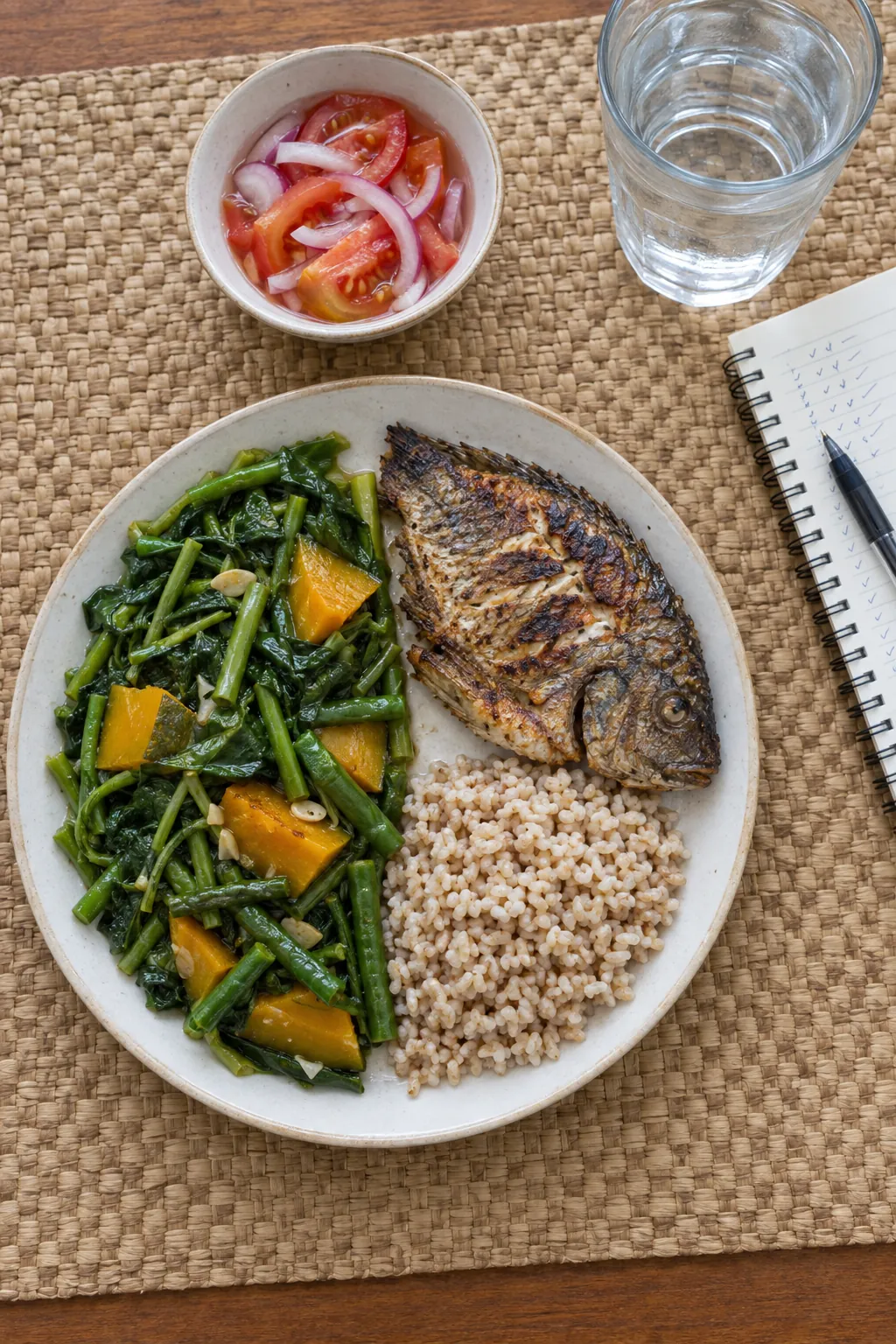
Grilled and steamed fish. Inihaw na bangus, tilapia or galunggong, or steamed fish with ginger, give plenty of protein with little added fat. Fish that is grilled rather than fried is one of the simplest swaps there is.
Vegetable ulam. Pinakbet, ginisang ampalaya, ginisang sitaw at kalabasa, chopsuey, laing made with less gata, kangkong with garlic. Half the plate can be vegetables, and it should be most days.
Eggs and tofu. A boiled egg is easy protein for breakfast or merienda; tokwa that is steamed or sauteed rather than deep-fried works in place of meat.
Fresh fruit. Papaya, pineapple, bananas and a ripe mango in season cover the sweet craving better than a soft drink or a pastry.
Low-calorie gulay for half the plate
Most Filipino vegetables are light on their own. What makes a vegetable ulam heavy is what goes in with it: the oil for the gisa, the gata, and the pork or chicharon added for flavour.
The lightest are the leafy and watery ones: kangkong, pechay, malunggay, repolyo, upo, sayote, labanos, pipino and okra. Sitaw, ampalaya, talong and kalabasa are still light and fill the plate well. Kamote, gabi, patatas and mais are starchier, so count them closer to rice than to gulay.
Ways to cook them that keep them light:
- Blanched or steamed, with bagoong or a calamansi and toyo dip on the side, as in ensaladang talong or steamed okra.
- In sabaw. Tinola, sinigang, nilaga and bulanglang all take whole handfuls of gulay.
- Ginisa with a measured spoon of oil and plenty of garlic, onion and tomato.
- Pinakbet and chopsuey with shrimp or chicken in place of lechon kawali or chicharon.
Ten low-calorie Filipino foods to keep in the kitchen
- Eggs, boiled for breakfast or merienda.
- Tokwa, steamed or sauteed.
- Galunggong, tilapia or bangus for grilling or sinigang.
- Chicken breast or skinless thigh for tinola and inihaw.
- Monggo for ginisang monggo.
- Kangkong, pechay and malunggay for sabaw and gisa.
- Sitaw, kalabasa, ampalaya, talong and okra for pinakbet.
- Sayote and green papaya for tinola.
- Tomatoes, cucumber and onions for ensalada.
- Papaya, pineapple and bananas for dessert and merienda.
Lighter versions of the dishes you already cook
| Usual dish | Lighter version |
|---|---|
| Lechon kawali or fried liempo | Inihaw na liempo with the fat trimmed, or pork sinigang |
| Fried chicken | Inihaw na manok or chicken tinola, skin removed |
| Pritong isda | Inihaw or steamed fish, or sinigang na isda |
| Adobo swimming in oil | Adobo with skinless chicken, fat skimmed off the sauce |
| Ginataang gulay with full gata | The same dish with half the gata and some broth |
| Pancit canton with lots of oil | Pancit with more cabbage, carrots and chicken, less oil |
| Soft drinks and milk tea | Water, calamansi juice with little sugar, or brewed iced tea without syrup |
A sample day of low-calorie Filipino meals
An example of how a day can look. Portions depend on your size, activity and health, so treat it as a pattern to adjust.
| Meal | What is on the plate |
|---|---|
| Breakfast | Tinapa or a boiled egg, a measured cup of rice, tomatoes and cucumber |
| Lunch | Sinigang na isda with kangkong and labanos, a measured cup of rice |
| Merienda | A banana or boiled saba, or a cup of papaya |
| Dinner | Inihaw na manok without the skin, ginisang ampalaya or pinakbet, half a cup of rice |
For more breakfasts in the same style, see our Filipino breakfast ideas, for a week of lunches and dinners, healthy ulam ideas for the week, and for every meal of the week with a market list, our Filipino meal plan for a week.
Keep these for occasions
Some of the most loved dishes carry a lot of fat or sugar in every serving: lechon kawali, crispy pata, sisig, chicharon, kare-kare with bagoong, anything fried in a deep pan, and sweet drinks from soft drinks to milk tea. None of them need to disappear. They work best as the fiesta, the birthday and the Sunday lunch, and less well as a Tuesday.
Cooking changes that keep the ulam
Trim visible fat and remove chicken skin before cooking adobo or tinola.
Measure the oil with a spoon instead of pouring from the bottle. Much of the difference between a light and a heavy dish is the oil that went into the pan.
Grill, steam or boil in place of deep-frying where the dish allows it.
Use less gata in ginataan dishes, or stretch it with broth.
Go easy on the sauce: a ladle of sarsa over rice adds up quietly.
Rice, handled rather than dropped
Rice is the staple and giving it up rarely lasts. A measured cup instead of an unmeasured mound, a little brown rice mixed in, and more vegetables on the plate do more for most people than cutting rice completely. Our article on losing weight on a rice-based diet covers portions in detail.
Where the numbers come from, if you want them
If you want calorie and nutrient figures for Filipino foods, the Food and Nutrition Research Institute of the Department of Science and Technology (DOST-FNRI) publishes Philippine food composition tables. They are the reference Filipino dietitians use, and they reflect local ingredients rather than foreign recipes. For a plan built around your own health, see a registered nutritionist-dietitian, especially with diabetes, high blood pressure or kidney disease.
Putting it on the table
A plate that is half vegetables, a quarter grilled fish or lean meat and a quarter rice, eaten most days, with the heavy dishes saved for occasions, is a low-calorie Filipino diet without the word diet in it. The meal prep gallery shows plates and weekly boxes built that way in ordinary Filipino kitchens, and our guide to meal prep for weight loss turns it into a Sunday routine.
Questions people ask
What Filipino food should I eat to lose weight? Sabaw dishes such as sinigang and tinola, grilled or steamed fish, vegetable ulam such as pinakbet and ginisang monggo, eggs and tokwa, with a measured cup of rice. Eating these most days, and keeping fried and very fatty dishes for occasions, matters more than any single food.
Is sinigang low in calories? Sinigang is mostly broth and vegetables, so a bowl is one of the lighter ulam on the table. Fish or shrimp sinigang is lighter than pork belly sinigang.
Which gulay is lowest in calories? Leafy and watery vegetables such as kangkong, pechay, upo, sayote, labanos and pipino. Root crops such as kamote, gabi and potatoes are starchier and sit closer to rice.
Do I have to stop eating rice? No. A measured portion, more vegetables beside it, and fewer refills work better for most people than cutting rice out.
What if the weight is mostly around the belly? Fat around the waist is worth taking seriously, and the same eating pattern helps. Our guide to visceral fat explains how to check it with a tape measure, and our article on the average weight of Filipino adults shows where the national figures sit.
Fit Bud’s weight-loss coaching pairs training at home with habit-based guidance on portions, ulam and merienda, and sends anything medical to your doctor. If you would like help with both, tell us your town and your goal.