
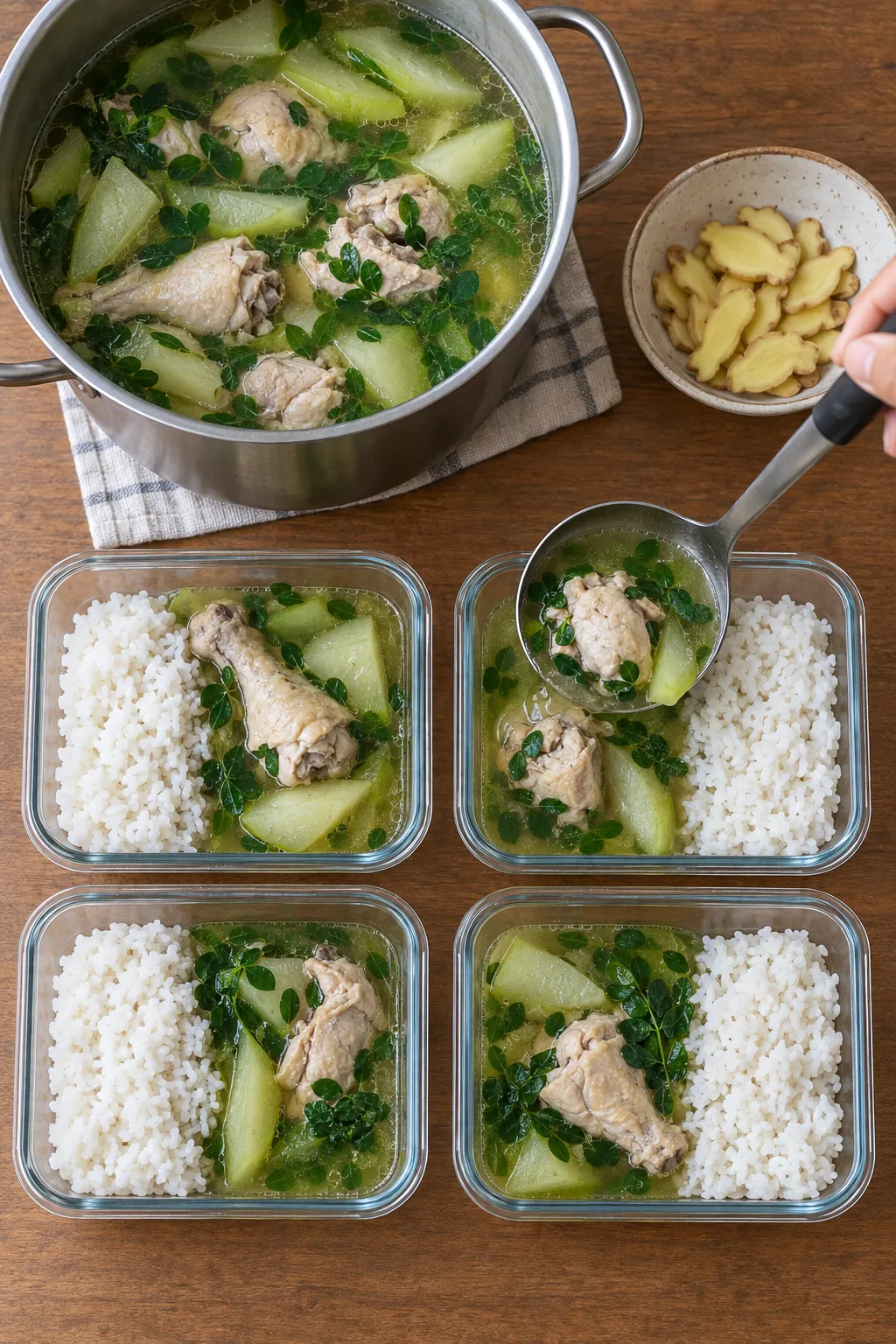
Generated illustration.
“Anong ulam?” is asked in every Filipino home, usually at the moment everyone is already hungry. When the answer is decided on the spot, it tends to be whatever is fastest: fried, from a can, or delivered. Deciding the week’s ulam ahead, from a short list of dishes that are good for you, takes that moment away.
Here is that list, set out as a week. Every dish is one most Filipino cooks already know. The difference is in how it is cooked and what sits beside it on the plate.
The pattern behind a healthy ulam
People ask whether Filipino food is healthy, and the honest answer is that most of it is. Sinigang, tinola, grilled fish, monggo and the vegetable dishes are healthy Filipino food by any measure; the trouble comes from the frying oil, the fatty cuts, the sweet drinks and the size of the rice portion beside them.
A healthy ulam usually does three things. It carries protein from fish, chicken, eggs, tokwa, monggo or lean meat. It brings vegetables, either inside the dish or beside it. And it goes easy on oil, gata and sauce. Rice stays, in a measured scoop.
A week of healthy ulam
Monday. Lunch: chicken tinola with malunggay and green papaya. Dinner: ginisang ampalaya with egg.
Tuesday. Lunch: inihaw na bangus with tomato and onion. Dinner: pinakbet with a little bagoong.
Wednesday. Lunch: chicken adobo, skin removed and sauce reduced, with ginisang pechay. Dinner: sinigang na hipon with kangkong and labanos.
Thursday. Lunch: ginisang monggo with malunggay. Dinner: steamed fish with ginger and pechay.
Friday. Lunch: tokwa’t gulay, tofu sauteed with chopsuey vegetables. Dinner: paksiw na isda with eggplant and ampalaya.
Saturday. Lunch: chicken bistek with onions and a side of sitaw. Dinner: nilaga with lean beef and plenty of cabbage and pechay, fat skimmed.
Sunday. Lunch: laing made with less gata, and grilled fish. Dinner: tortang talong with a fresh tomato salad.
Swap freely; the point is that each day already has an answer.
Cooking tweaks that keep ulam light
Measure the oil with a spoon.
Grill, steam, boil or bake where the dish allows it.
Remove chicken skin and trim visible fat before cooking.
Skim the fat from sabaw dishes as they cool.
Stretch gata with broth in ginataan dishes.
Keep sauces and sawsawan on the side.
Where the heavier favourites fit
Lechon kawali, crispy pata, kare-kare, sisig and fried chicken still belong on the table; they work best as the weekend treat or the family occasion. For more on which dishes are naturally lighter, see low-calorie Filipino food, and for putting protein on every plate, high-protein Filipino food.
Cook once, eat twice
Most of these dishes keep well for a few days in the fridge, which makes them ideal for cooking double and packing the rest as baon. The meal prep gallery shows tinola, adobo and grilled fish portioned into boxes, and our healthy baon ideas turn the week’s ulam into lunches. To plan breakfast and merienda around them too, use our Filipino meal plan for a week.
Food alongside training
If the aim is to lose weight or get stronger, the ulam does most of the work in the kitchen and training does the rest. Fit Bud’s weight-loss coaching pairs training at home with habit-based guidance on portions, ulam and merienda, and sends anything medical to your doctor. If you would like help with both, tell us your town and your goal.