Generated illustration.
A kettlebell is a cannonball with a handle, and that shape is the whole point. The weight sits below the grip, so it swings, hangs and sits against the chest in ways a dumbbell will not. One bell tucked under the sofa covers most of what a beginner needs, and it takes less floor than a folded mat.
The catch is that a kettlebell is easy to use badly. Most home injuries with one come from the same two errors: rounding the back to pick it up, and swinging it with the arms. Learn the moves below in order and both are avoided.
Picking a first bell
Lighter than you think. A beginner woman usually starts around 6 to 8 kilograms and a beginner man around 10 to 12, but those are starting guesses and strength varies more than any chart suggests. The test that matters is the goblet squat below: you should manage ten slow repetitions with good form and feel you could do a few more.
Buy one bell rather than a set. You will outgrow it in a couple of months, and by then you will know which size to get next.
Five moves, in the order to learn them
Do each for 8 to 10 slow repetitions, rest a minute, and go round two or three times. That is about twenty-five minutes, warm-up included; stretching before a workout explains what to do in those first few minutes.
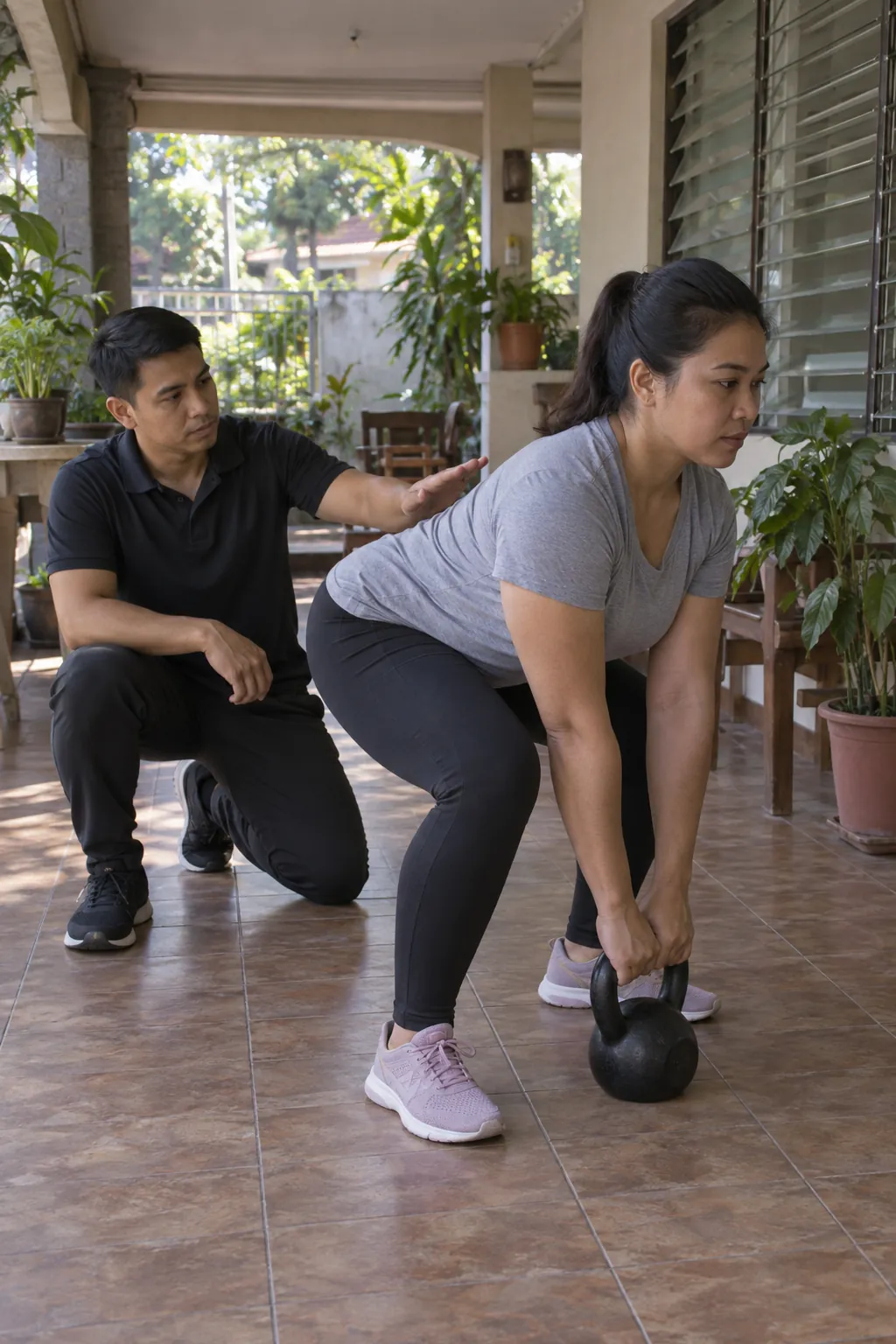
Deadlift. Stand with the bell between your feet. Push the hips back as if closing a car door with your behind, keep the back flat, grip the handle and stand up tall. Lower it the same way. This is the foundation of everything else, because it teaches the hips to do the work that people try to do with the lower back.
Goblet squat. Hold the bell by the horns against your chest, elbows pointing down. Sit between your heels, keep the chest up, and stand. The weight in front makes an upright squat easier to find, which is why coaches often teach the squat with a kettlebell before anything else.
Single-arm row. One hand and one knee on a sturdy bench or the edge of a bed, back flat, bell hanging from the other hand. Pull the elbow back past the ribs and lower slowly. A desk job pulls the shoulders forward all day, and this pulls them back.
Overhead press, kneeling. Kneel on a mat, bell racked at the shoulder, and press it up until the arm is straight beside the ear. Kneeling stops you arching the back to cheat the weight up. Do both sides.
Swing. Last on the list for a reason. Hinge exactly as in the deadlift, hike the bell back between your legs, then snap the hips forward so the bell floats to chest height. The arms are only ropes. If your shoulders are tired after swings, the arms did the lifting; if your hips and backside are, you did it right.
Once the deadlift is solid and you have two bells, a farmers carry makes a good sixth move: pick them up and walk. It is also one of the stations in the Hyrox workout, if you ever want a race to train for.
The mistakes to watch for
Rounding the back at the bottom of the deadlift or swing is the big one. If you cannot keep the back flat, the bell is too heavy or the hips are not bending enough. Stop and reset.
Squatting the swing, bending the knees deeply instead of hinging at the hips, turns it into a different and less useful move. Letting the bell pull you forward at the top, or leaning back to stop it, both mean the hips are not finishing the movement.
Training on a tiled floor in socks, or on a rug that slides, is a quiet risk. Barefoot on a mat or in flat shoes is safer than either.
Where the heat fits in
A kettlebell session gets the heart going more than it looks, especially once swings are in. Train before the sun is high or in the evening, keep water close, and cut the rounds short on a humid day. Our article on training in the Philippine heat covers timing and what to wear.
When a coach is worth it
The deadlift and the swing are where a second pair of eyes helps most, because a rounded back is hard to feel and easy to see. Fit Bud’s strength training sessions use kettlebells, dumbbells and bands at your home, condo gym or clubhouse, and the coach brings the bell as agreed. To see what these moves look like with a coach beside the client, the home workouts gallery includes a kettlebell goblet squat in a kitchen, and the exercise form gallery shows the deadlift from the side.
If you would like the first session to be the one where your deadlift gets checked, tell us your town and when you are free.